
Best Beaches Near Puerto Viejo, Costa Rica (2026 Guide)
Five beaches within 13 km of Puerto Viejo, each completely different from the last. Black volcanic sand at Playa Negra. Consistent beach break and surf schools at Cocles. A forested cove at Chiquita. Turquoise water inside a natural bay at Punta Uva. Wild jungle coastline at the edge of a protected wildlife refuge in Manzanillo. Here’s what each one is actually like, which is best for what, and how to get there without a car.
Quick comparison
| Beach | Distance from town | Best for | Vibe |
|---|---|---|---|
| Playa Negra | 15–20 min walk / 5 min bike | Sunsets, morning walks, calm swims | Local, black sand, quiet |
| Playa Cocles | ~3 km south | Surf lessons, long beach days | Active, popular, beach break |
| Playa Chiquita | ~5 km south | Calm swimming, relaxation | Secluded, forested, peaceful |
| Punta Uva | ~8 km south | Swimming, snorkeling, photos | Turquoise, jungle-framed, wow |
| Manzanillo | ~13 km south | Wildlife, kayak, snorkel tours | Wild, remote, protected refuge |
Playa Negra — black sand, sunsets, local atmosphere
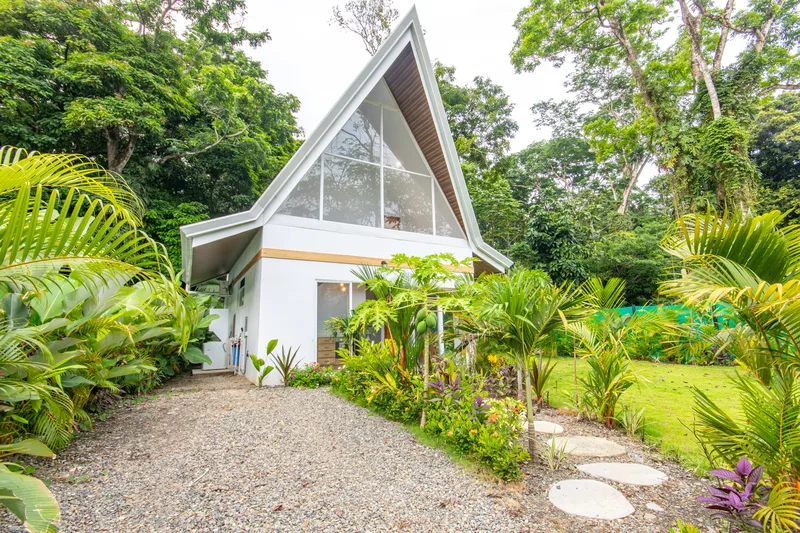
Playa Negra is the closest beach to Puerto Viejo town center and the one directly accessible from Crystal Jungle Villa. Two kilometers of black volcanic sand — the color comes from ancient volcanic mineral erosion along this stretch of coast — backed by a dense wall of coconut palms. Visually unlike anything on the Pacific side of Costa Rica.
It’s best for morning swims on calm days, long walking at any time of day, and late-afternoon photography when the low sun turns the dark sand almost silver. The crowd situation: local families and surfers, not tour groups. Far less visited than Cocles or Punta Uva. On smaller swell days, intermediate surfers find it a mellow alternative to the busier breaks further south.
Swimming reality check: Shore break and lateral currents make Playa Negra unsuitable for casual swimming when swell is running. Mornings are typically calmer. If the waves are breaking sharply at the sand, walk instead. No lifeguards. Never swim alone. Full Playa Negra guide →
Playa Cocles — the best for surf and long beach days
Playa Cocles is 3 km south of Puerto Viejo town center and is the most visited beach in the area — for good reason. A long stretch of open sand, consistent beach break peaking at multiple spots, several surf schools, and a few open-air bars where you can eat and drink facing the water. It's the closest thing to a classic beach-day setup on this coast.
Surf: Cocles is the right choice for surf lessons. Multiple schools operate on the beach, with 2-hour beginner classes running $50–80 USD. Lewis Brothers Surf is a well-regarded local school. Intermediate surfers find consistent waves here without the reef risk of Salsa Brava, which sits in front of the town center and is strictly for experts.
Swimming: Beach break means rip currents are possible on bigger swell days. Swim in the calmer sections toward the edges of the beach, away from the main surf peaks. On flat days, Cocles is one of the more relaxed swimming options in the area.
Playa Chiquita — calm, forested, and unhurried
Playa Chiquita is 5 km south of Puerto Viejo, and it feels like a different world from Cocles. No surf schools, no vendors, no beach bars — just a small, sheltered stretch of sand tucked behind thick tropical vegetation with a few large rocks breaking the shore. On calm days the water is gentle enough for easy swimming, and it’s consistently the least crowded beach in this stretch of coast.
No facilities here at all. Come self-sufficient: bring water, food, sunscreen, and take everything out when you leave. The coastline stays this way because visitors treat it right.
Manzanillo — wild coastline and wildlife refuge
Manzanillo sits 13 km south of Puerto Viejo at the far end of the coastal road, where the Gandoca-Manzanillo Wildlife Refuge begins. The village has maybe 200 residents, a handful of restaurants, and a beach that hasn’t been developed — palm-lined, backed by forest, and far quieter than anything closer to town. It’s the right choice when you want a full day out rather than a morning beach stop.
The main activities here are kayaking through the refuge’s mangrove channels (local guides charge roughly $40–60 USD for half-day tours), snorkeling the reef just offshore, hiking the 5 km coastal trail that runs through the refuge, and eating fresh seafood at Maxi’s or one of the other small restaurants on the main strip. Sloths, howler monkeys, and toucans are common along the trail — move slowly and scan the canopy.
Getting to the beaches without a car
Bicycle: The best option for Cocles, Chiquita, and Punta Uva. Bike rentals in Puerto Viejo town center run $5–10 USD/day. The coastal road south is paved and mostly flat — Punta Uva is 30–40 minutes on a comfortable bike. Manzanillo adds another 20 minutes. Locking your bike at each beach is standard; most spots have trees or a rack.
Taxis: Available in Puerto Viejo and reliable for flexibility. Approximate one-way prices: Cocles $3–5, Chiquita $4–6, Punta Uva $5–8, Manzanillo $10–15. Agree on the price before you go. Share with other travelers and the cost drops significantly.
Local bus: A public bus runs from Puerto Viejo to Manzanillo and stops at the main beach access points along the route — Cocles, Chiquita, Punta Uva. Inexpensive (under $2). Schedules vary; ask at your accommodation for the current timetable, as they change seasonally.
More: Puerto Viejo without a car guide →
Swimming conditions & safety
The Caribbean side of Costa Rica has warmer, clearer water than the Pacific, but conditions vary a lot from beach to beach, so it is worth knowing where it is calm and where it is not before you get in.
- Calmest for swimming: Punta Uva and the sheltered end of Playa Chiquita. Both have reef-protected coves where the water is usually flat and shallow — the best choice for families and weaker swimmers.
- Watch for rip currents: Cocles is the region's main surf beach and can pull hard, especially when the swell is up (roughly December–March). Swim near the lifeguard tower when it is staffed, and if you feel dragged out, swim parallel to shore rather than against the current.
- Playa Negra: generally gentle and good for a relaxed dip, though there is no reef, so check the surf before swimming out.
- Best water clarity: the drier months and early morning, before wind picks up the surface. If snorkeling is your priority, Punta Uva and Manzanillo reward an early start — see our snorkeling guide.
Water temperature sits around 27–29°C year-round, so no wetsuit is ever needed. Timing your beach days is easy with the best time to visit guide, which covers how the swell and rain shift month to month.
Day trip tips
- Leave before 9 am. You get the best light, the calmest sea, and significantly fewer people at every beach on this stretch. By 11 am, Punta Uva in particular can feel crowded on a peak-season weekend.
- Use reef-safe sunscreen. This is required inside protected areas and important everywhere on this coast — the reef systems offshore are directly affected by chemical sunscreen runoff. Mineral-based (zinc/titanium oxide) is the standard.
- Chiquita and Manzanillo have no facilities. Bring all water, food, and supplies. There are small restaurants near Punta Uva and in Manzanillo village, but nothing on the beach itself at the quieter spots.
- Read the water before swimming. Sharp shore break, discolored water, or churned-up foam means conditions have changed — don’t go in. Ask your accommodation that morning what the sea is doing, or simply observe for 5 minutes before entering.
- Bring insect repellent. The jungle trail at Manzanillo and the forested approach to Playa Chiquita can have biting insects, especially after rain. DEET or a DEET-free jungle formula both work.
- Use a dry bag for snorkeling or electronics. Waterproof cases are sold in Puerto Viejo, but bringing your own is more reliable. Salt water and sand destroy phones quickly.
- Pack out everything you bring. Bins are scarce or nonexistent at the more remote beaches. The coastline stays this way because visitors take their trash with them.
Best beaches near Puerto Viejo: FAQ
What is the best beach near Puerto Viejo for swimming?
Punta Uva is the best swimming beach in the area on calm days — a natural bay with protected water and good clarity. Playa Chiquita is the second-best option for calm swimming. Both can have currents on bigger swell days, so check conditions before entering. The Caribbean changes faster than most people expect.
Which beach is best for surf?
Playa Cocles for lessons and intermediate surfing — consistent beach break, multiple surf schools, classes from $50–80 USD for 2 hours. Salsa Brava, right in front of Puerto Viejo town, is a powerful reef break for experienced surfers only. See the full surfing guide for details on both.
Can I visit the beaches without a car?
Yes, easily. Playa Negra is a 15–20 minute walk from Puerto Viejo center. Cocles, Chiquita, and Punta Uva are straightforward by bicycle ($5–10/day) — the road is flat and paved. Taxis cost $3–8 for those same beaches. A public bus also runs the full route to Manzanillo.
What is the closest beach to Puerto Viejo town?
Playa Negra — about 15–20 minutes on foot or 5 minutes by bike from the town center, heading north on the coastal road. Two kilometers of black volcanic sand, good for sunsets and morning walks, with swimmable conditions on calm days.
When is the best time to visit the beaches near Puerto Viejo?
February–March and September–October both offer calmer sea conditions on the Caribbean coast. September–October is the pick for snorkeling — water clarity peaks during these drier months and crowds are lower. The beaches are worth visiting year-round, but pack a rain jacket and insect repellent regardless of season.
Related guides
- Snorkeling in Puerto Viejo — Cahuita, Punta Uva & Manzanillo with tour prices and visibility tips
- Surfing in Puerto Viejo — Salsa Brava, Cocles & Playa Negra for all levels
- Playa Negra guide — black volcanic sand, intermediate surf and Puerto Viejo's best sunsets
- Best time to visit Puerto Viejo — month-by-month weather and the secret Sep–Oct window
- Wildlife in Puerto Viejo — sloths, monkeys, toucans and where to spot them
- Getting to Puerto Viejo from San José — bus, shuttle & driving options with prices