
Playa Negra, Puerto Viejo de Talamanca
Most Caribbean beaches are white sand and postcard-perfect. Playa Negra is neither of those things — it's 2 km of dark volcanic sand with a wall of coconut palms at the edge and a surf break that works on smaller days. It sits 1–2 km north of Puerto Viejo town center: a 10-minute walk, 5 minutes by bike. Here's what it's actually like to swim, surf, and spend an afternoon there.
What Playa Negra is actually like
The sand at Playa Negra is a deep grey-black, not the white or tan you'd find at Cocles or Punta Uva further south. The color comes from volcanic minerals — centuries of erosion from ancient volcanic formations along the Caribbean coast. Against green palms and a bright sky, the contrast is striking, and photography here is especially productive in the hour before sunset when the low light turns the dark sand almost silver and casts long shadows across the beach.
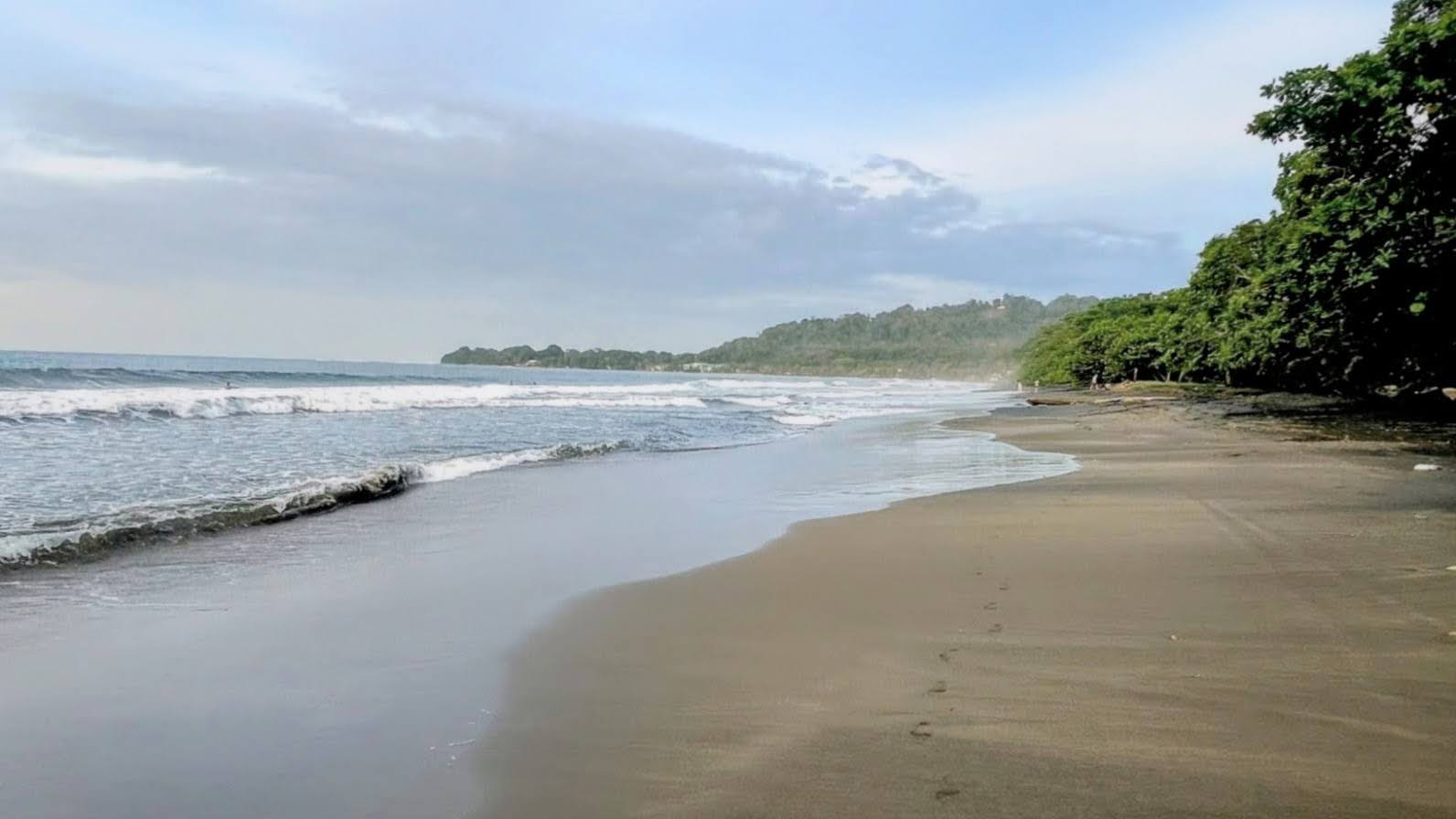
The atmosphere is local. You'll share the beach with surfers, residents from the road-side villas, and the occasional early-morning wildlife watcher scanning the tree line for toucans. No beach clubs, no vendors, no rental chairs. Just a 2 km stretch of open coast with the jungle pressed right up behind it. That's the appeal — it's the least commercial beach within walking distance of Puerto Viejo.
The water is typically clearer than at Cocles (less foot traffic, less churned sand) but the trade-off is more variable conditions. This is not a beach where you arrive and immediately dive in without looking at the sea first.
Swimming at Playa Negra
Swimming here is possible on calm days and genuinely pleasant — but conditions vary more than at Punta Uva or Playa Chiquita, which have more protected water. Shore break and lateral currents appear quickly when Caribbean swell picks up, and Playa Negra has no lifeguards. Children and inexperienced swimmers should only go in on the flattest days, in the shallower sections.
Practical tips for swimming here:
- Read the water first — every time. If waves are breaking sharply at the sand's edge or the water looks rough and discolored, walk the beach instead. Conditions can shift in an hour. This isn't overcaution — the Caribbean swell is genuinely unpredictable.
- Walk the length before picking a spot. Playa Negra is 2 km long and conditions vary significantly along it. The gentler sections with lower shore break are usually worth finding. Take 10 minutes to look before you commit.
- Never swim alone. This applies to every beach on this coast. Variable currents mean you want someone who can act if you get into trouble.
- Know what to do in a rip current. Don't fight it by swimming directly back to shore. Swim parallel to the shoreline until you're out of the current's pull, then angle back in. Most rip currents are narrow — you don't have to swim far sideways.
- Go in the morning. Swell and wind typically build through the day. Before 9 am is when Playa Negra is most likely to offer calm, swimmable conditions.
Surfing at Playa Negra
Playa Negra is not the best surf beach near Puerto Viejo — that's Cocles, 3 km south, with more consistent peaks and multiple surf schools. But on the right small-swell day, Playa Negra delivers mellow, uncrowded beach break that's well suited to intermediate surfers who want to practice without competing for waves. It's also convenient if you're staying close by: you can check conditions from the road and decide in 30 seconds whether it's worth paddling out.
On bigger swells, the break becomes heavier and less forgiving, and most surfers shift to Cocles or Salsa Brava. Salsa Brava — the heavy reef break in front of Puerto Viejo town — is expert-only at any size. Ask at local surf shops in town for current conditions; they'll tell you honestly whether Playa Negra is worth it or if you should go south.
Best time to visit Playa Negra
Late afternoon — the hour before sunset is when Playa Negra looks its best. The low, warm light hits the dark sand at a flat angle and turns it almost silver. Palm silhouettes against a lit sky. Long shadows. It's the most photogenic beach at golden hour within easy reach of Puerto Viejo, and it earns that. Plan to arrive about 45 minutes before sunset and walk south.
Early morning is the practical choice for swimming and surfing. Before 9 am the wind is typically low, the sea is at its calmest, and you'll have stretches of 2 km of beach almost entirely to yourself. The light is also good for photography from the other direction — soft and cool, with mist sometimes sitting in the tree line.
For sea conditions, February–March and September–October are the calmest months on the Caribbean coast. September–October are particularly good — drier, less wind, and fewer visitors than the high season. Even in the wet season, Playa Negra is worth visiting — the atmosphere when rain approaches across the water is unlike anything on a Pacific beach.
How to get to Playa Negra from Puerto Viejo
Playa Negra is the easiest beach to reach from Puerto Viejo — 1–2 km north of the town center on a flat coastal road that runs directly alongside it.
- Walking: 15–20 minutes from Puerto Viejo town center on Ruta 256 heading north. The road is flat, the beach is impossible to miss, and the walk through the neighborhood is worth doing at least once.
- Bike: 5 minutes. Bike rentals in Puerto Viejo center cost $5–10 USD/day. The road is flat and you can ride directly alongside the beach once you arrive — easy to stop wherever conditions look good.
- Taxi: About $3–5 USD, 5 minutes. Taxis wait at the town center. It's a short trip and drivers know the beach well.
- From Crystal Jungle Villa: The villa sits close to Playa Negra — beach access is a short walk or a couple of minutes on a bike. You can check conditions from the road before committing.
Open Playa Negra on Google Maps
Nearby food & things to do
The Playa Negra stretch of road has a handful of small restaurants and bars, quieter than the main Puerto Viejo strip by design. A couple of local sodas serve rice-and-bean plates, fresh fish, and cold drinks — straightforward food at low prices. It's the kind of place where you can eat after a swim without worrying about the sand on your feet.
The tree line behind Playa Negra is one of the more reliable spots for early morning wildlife sightings without going on a formal tour. Howler monkeys are loud and almost guaranteed at dawn — their roar carries up to 5 km and you'll hear them well before you see them. Toucans move through the canopy regularly, and three-toed sloths hang in the cecropia trees that fringe the road. Move slowly, scan upward, and give the animals space. The area around Crystal Jungle Villa, just minutes from the beach, is a particularly productive stretch for sightings.
Playa Negra is also a good starting point for a day working south. Cocles is 3 km, Chiquita 5 km, Punta Uva 8 km — all reachable by bike on a flat road. Or go north to Cahuita National Park, about 15 km, for reef snorkeling and a jungle trail that runs directly along the coast. Full breakdown: best beaches near Puerto Viejo →
Playa Negra as a starting point: the Punta Uva loop
One of the best half-day rides on the Caribbean coast starts right here. Rent a bike in Puerto Viejo (most rental spots charge $10–15 for the day), roll south from Playa Negra, and follow the coastal road through four distinct beach stops before turning back. The road is flat, paved, and almost entirely shaded by jungle canopy — you won't need to be a serious cyclist to enjoy it.
The route south from Playa Negra: Cocles at 3 km is the first stop — a long, wild beach with serious surf and the iconic La Pecora Nera restaurant if you want a slow lunch. Playa Chiquita at 5 km is quieter, with calmer water on good days and a scattering of jungle lodges. Punta Uva at 8 km is the standout: a horseshoe-shaped bay with aquamarine water protected by a natural rock shelf, consistently rated one of Costa Rica's most beautiful beaches. Manzanillo at 14 km marks the end of the line — the village sits at the edge of a wildlife refuge, and the snorkeling off the point is excellent. Total from Playa Negra and back: roughly 28 km, doable in 3–4 hours with stops.
Early morning is the best window. The road stays shaded until around 10 am, wildlife is active, and the beaches are empty. Bring water and sunscreen — once you pass Punta Uva there are almost no shops. If you'd rather not bike the full loop, a taxi from Puerto Viejo to Manzanillo costs around $20–25 one-way; you can bike back at your own pace.
Frequently asked questions
Is Playa Negra in Puerto Viejo good for swimming?
Swimming is possible on calm days and genuinely pleasant — but conditions vary more than at Punta Uva or Playa Chiquita, which have more protected water. Shore break and lateral currents appear when the Caribbean swell picks up, and there are no lifeguards. Always read the water before entering. Mornings before 9 am are the most reliably calm window.
Why is the sand at Playa Negra black?
The dark sand comes from volcanic minerals — the Caribbean coast sits near ancient volcanic formations, and centuries of erosion have produced the distinctive dark grey-to-black sand that makes Playa Negra look completely different from the white-sand beaches at Cocles and Punta Uva to the south.
How do I get to Playa Negra from Puerto Viejo?
Playa Negra is 1–2 km north of Puerto Viejo town center on flat Ruta 256 — 15–20 minutes on foot, 5 minutes by bike, or a $3–5 USD taxi ride. The beach runs alongside the road so you can check conditions before deciding where to stop.
Can you surf at Playa Negra?
Yes, on smaller swell days — Playa Negra has a mellow beach break suited to intermediate surfers and is typically less crowded than Cocles. On bigger swell days most surfers move south to Cocles or Salsa Brava. Ask at a local surf shop for the day’s conditions before heading out.
What is the best time to visit Playa Negra?
Early morning (before 9 am) for swimming and surfing — calmest conditions, lowest wind, beach almost to yourself. The hour before sunset for photography and atmosphere — the low light turns the black volcanic sand almost silver. Avoid midday: the dark sand heats up fast and the wind picks up.
Are there restaurants at Playa Negra?
Koki Beach is the best-known restaurant directly on the sand at Playa Negra — seafood and Caribbean plates with a sea view, especially good at sunset. A couple of small sodas along Ruta 256 serve simple rice-and-fish plates at local prices. For more options, Puerto Viejo town center is a 15-minute walk.
Is Playa Negra free to enter?
Yes. Playa Negra is a public beach and access is completely free. All beaches in Costa Rica are public by law — no entrance fees, no charges to access the sand.
Can you camp at Playa Negra?
No. There is no official campsite at Playa Negra and camping directly on the beach is not permitted. Some ecolodges near Puerto Viejo offer tent sites, but Playa Negra itself is not a camping destination.
Playa Negra, Cocles or Punta Uva — which beach should I choose?
Each has a different character. Playa Negra is the closest to Puerto Viejo town, with dark volcanic sand, calmer water, and the best sunsets — ideal for a relaxed swim or beach walk. Cocles, a few minutes south, has stronger surf and lifeguards. Punta Uva has the clearest turquoise water and the best snorkeling. Want the nearest, quietest option? Choose Playa Negra. See the best beaches guide for a full comparison.
Related guides
- Best beaches near Puerto Viejo — full comparison of Playa Negra, Cocles, Punta Uva & Manzanillo
- Surfing in Puerto Viejo — Salsa Brava, Cocles & Playa Negra for all levels
- Snorkeling in Puerto Viejo — Cahuita, Punta Uva & Manzanillo with tour prices
- Best time to visit Puerto Viejo — month-by-month weather and the Sep–Oct secret window
- Wildlife in Puerto Viejo — sloths, monkeys & toucans in the jungle around Playa Negra
- Puerto Viejo itinerary — 3, 5 & 7-day day-by-day plans